Ajalugu
C.F.Hahn Pub ajalugu
C.F.Hahn Pub – nimi ütleb, et “pubi”, taksojuhid nimetavad “restoraniks” ja kliendid ütlevad “teine kodu” – igaühel oma tõde, kõigil on õigus! Tule proovi meie maitsvaid roogasid, sõbralikku teenindust ja hubast miljööd.
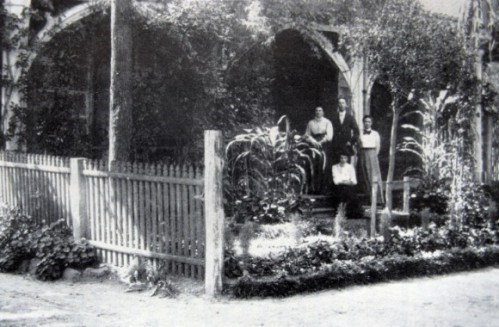 Pildil Herbert Hahn koos ema ja kahe õega vanematekodu ees aastal 1911.
See romantiline ja omal ajal tagasihoidlik maja, praeguse aadressiga Riia mnt 129 a, on valminud 1850ndatel aastatel ning on Pärnus rohkem tuntud kui “Linnaaedniku Maja”. Tema põnevat ajalugu on suhteliselt vähe uuritud aga midagi huvitavat võiks siinkohal ära märkida, selgitamaks miks üks Pärnu Pub sellist nime kannab.
Tõesti, selles omapärases väikses elamus, millele tänavapoolne sammastik on ainulaadne, on sündinud maailmakodanik Herbert Hahn. Mees, kelle mälestustahvel ripub Saksamaal pea igas raudteejaamas, kust ta on läbi sõitnud.
On ju tema see, kes on kogu Waldorfi pedagoogika üks esimesi õpetajaid ja kauaaegne ideloogiline juht – tegelikult oma elu lõpuni 20.06.1970.
Aga Pärnu kontekstis ei tähenda Herbert Hahn pooltki seda mis tema isa, Carl Friedrich Hahn, Oskar Brackmanni linnavalitsemise aegne (1879-1915) linnaaednik.
Ei maksa arvata, et Carl Friedrich Hahni näol oli tegu mõne labidaid õlal kandva ja aednikukäru lükkava saksa soost eestöölisega. Vastupidi, ta oli härrasmees ning linnapea Brackmanni silmis kõrges aus. Põlvest põlve kantud legend räägib neist meestest kui suurtest sõpradest ja mõttekaaslastest, kes, mustad kõvakübarad peas, linnatänavail jalutasid. Linnapea Brackmannil olnud käes terava otsaga vihmavari , millega ta paberitükikesi ja prügi sillutistelt prügikastidesse korjas, kui mõnd sellist hooletust märkas, ning linnaaednik Hahnil oli suus teda peaaegu alati saatev hõõguv pabeross. 1980. aastate lõpul otsustati linnapea Brackmannile mälestusmärk püsti panna, koos sellega oli ka idee aednik C.F. Hahn´gi pronksi valada, aga paraku oli baltisakslastelt saadud rahasumma liig väike ning püstitatigi ausammas Brackmannile üksi.
Aga jäädvustamist Carl Friedrich Hahn väärib, sest kui Brackmann tellis (1888) Riia parkide direktorilt Georg Kuphaldtilt Pärnu haljastuse projekti ning juhtis parkide rajamist, tegi ta seda koos lahutamatu Hahniga, kes oma ameti tõttu iga päev parkidega tegevuses oli. Seega, kui räägitakse Oscar Brackmannist kui Pärnu parkide rajajast ja linna kuurordiks arendajast, ei saa mööda minna Carl Friedrich Hahnist. Sellesama rohelise sammastega majakese taga asus suur puukool, mis pidi varustama parke ja haljasalasid. Puude ettevalmistamine oli puhtalt C.F. Hahni kui linnaaedniku töö. Ja puid läks vaja, sest neil aastail laiendati Rannaparki, rajati hulk puiesteid. Alamrahval keelati linna kuurorditsoonis patseerida ning nende tarbeks rajati Niidupark, kus veel nõudkogude ajal linnarahvas pillerkaaritas ja pikniku pidas. Carl Friedrich Hahn on maetud Alevi kalmistule, mille eest ta oma eluajal linnaaednikuna samuti hoolt kandis. Hahni lihtsa metallristiga haud on üles leitud. Täpset surmadaatumit siiski ei teata – andmed on ajavoolus kaotsi läinud…
C.F. Hahn Pub – A Piece of Pärnu’s History
C.F. Hahn Pub – the name says “pub,” taxi drivers call it a “restaurant,” and our customers call it a “second home.” Everyone has their own truth, and everyone is right! Come and experience our delicious dishes, friendly service, and cozy atmosphere.
The photo shows Herbert Hahn with his mother and two sisters in front of their family home in 1911.
This romantic and once-modest house, located at Riia mnt 129a, was completed in the 1850s and is better known in Pärnu as the “City Gardener’s House.” While its fascinating history has been relatively little studied, there are some interesting facts worth noting to explain why a Pärnu pub bears this name.
Indeed, this unique small residence, distinguished by its one-of-a-kind street-side colonnade, is the birthplace of the global citizen Herbert Hahn. He is a man whose commemorative plaque can be found in almost every German railway station he ever passed through. “Indeed, he is one of the pioneer teachers of Waldorf pedagogy and its long-standing ideological leader – effectively until the end of his life on 20 June 1970.”
However, in the context of Pärnu, Herbert Hahn’s legacy doesn’t compare to that of his father, Carl Friedrich Hahn, who served as the City Gardener during Mayor Oskar Brackmann’s administration (1879–1915).
One should not imagine Carl Friedrich Hahn as a simple foreman carrying shovels and pushing a wheelbarrow. On the contrary, he was a gentleman held in high esteem by Mayor Brackmann. A legend passed down through generations speaks of them as great friends and like-minded peers who strolled the city streets in black bowler hats. Mayor Brackmann would carry a sharp-tipped umbrella to pick up litter from the pavement, while City Gardener Hahn almost always had a glowing cigarette in his mouth. In the late 1980s, when it was decided to erect a monument to Mayor Brackmann, there was an idea to cast C.F. Hahn in bronze as well. Unfortunately, the funds received from the Baltic Germans were insufficient, and the monument was erected for Brackmann alone.
Yet, Carl Friedrich Hahn deserves to be remembered. When Brackmann commissioned the landscaping project for Pärnu from Georg Kuphaldt (Director of Riga Parks) in 1888, he managed its implementation alongside the inseparable Hahn, who oversaw the parks daily. Therefore, whenever Oskar Brackmann is credited as the founder of Pärnu’s parks and the developer of the resort, Carl Friedrich Hahn cannot be overlooked.
Behind this very same green house with columns stood a large nursery that supplied the city’s parks and green spaces. Preparing the trees was entirely the work of C.F. Hahn. And trees were in high demand, as the Beach Park (Rannapark) was being expanded and numerous boulevards were being established. While the “common folk” were initially discouraged from strolling in the resort zone, Niidupark was created for them—a place where townspeople continued to feast and picnic well into the Soviet era.
Carl Friedrich Hahn is buried in the Alevi Cemetery, which he also tended to during his life as the City Gardener. His grave, marked by a simple metal cross, has been rediscovered, though the exact date of his death remains unknown—lost to the passage of time.